FACIAL RECOGNITION & ACCESS INTELLIGENCERecognise the event.
Recognise the event.
Connect the next step.
Explore facial matching and visual analytics alongside readers, visitor permissions and controlled entry points. Availability depends on the selected platform and agreed solution scope.
Age Verification
Gender Estimation
Emotion Analysis
Accessories & Attire
Tattoo Matching
Control Entry
Define who can access the areas your site needs to protect.
Manage Visitors
Create a clear process for pre-clearance, arrival and departure.
Improve Vehicle Flow
Coordinate entry and exit around your traffic requirements.
Connect Infrastructure
Bring readers, gates, booms and turnstiles into one plan.
Review Access Events
Understand access activity through configured records and reporting.
Plan for Continuity
Assess power, connectivity and backup requirements before rollout.
AI Monitor Access & AutomationSolution overview
PeopleAuthorised entrySite-specific access rules
VisitorsPre-clearanceA defined arrival process
VehiclesEntry & exitGates, booms and ANPR
RecordsAccess eventsVisibility for authorised teams
Connected access workflows
Staff entry through authorised access points
Visitor arrival and pre-clearance checks
Vehicle movement at controlled entrances
Exceptions referred to the responsible team
ACTIONABLE INSIGHTS
More than a gate. A connected access process.
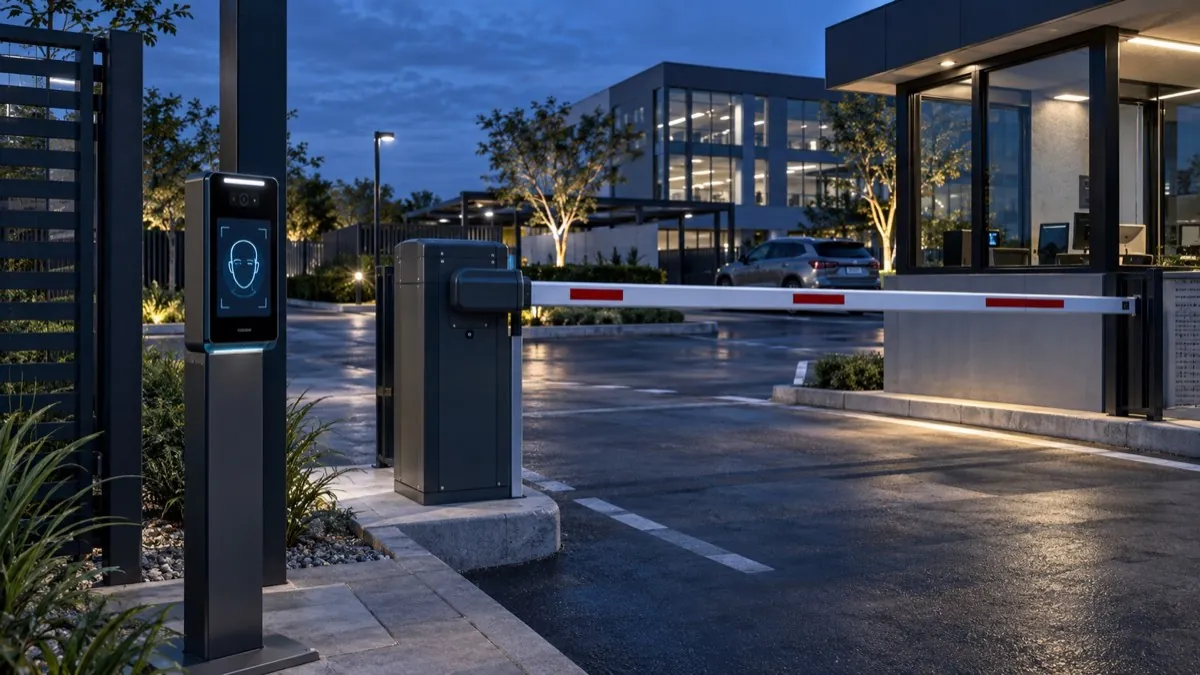
Effective access control combines clear rules, suitable technology and reliable physical infrastructure. Assess readers and visitor workflows together with gates, booms, turnstiles, electric fencing and supporting power requirements. The proposal identifies which equipment, integrations and installation work form part of the agreed scope.
- Assessment of entrances, traffic and access requirements
- People and visitor access workflows
- Gate, boom and turnstile integration
- ANPR and vehicle intelligence where configured
- Access event records and monitoring integration
- Power and connectivity planning, including backup options
KEY FEATURES
Control that fits your facilities.
Choose components and workflows around the users, vehicles and operating conditions of your site. Integration suitability is confirmed during assessment.
People Access Control
Configure entry around authorised users and designated areas. Select suitable reader and identification technologies for your environment.
Visitor Management
Discuss visitor pre-clearance, check-in requirements and access permissions. Create an arrival process that staff and visitors can follow.
Gate Automation
Plan automated gate operation around the entrance layout, operating conditions and expected traffic. Consider supporting safety and power requirements.
Booms & Turnstiles
Use appropriate physical access infrastructure for controlled vehicle lanes or pedestrian entry points, with integration into your agreed access process.
ANPR & Vehicle Intelligence
Record relevant vehicle movements and number plates where supported. Configure watch-list workflows and review exceptions according to site procedures.
CCTV & Monitoring Integration
Bring relevant access events and available video together where compatible. Give authorised teams context when investigating an entry or exception.
Electric Fencing & Infrastructure
Assess supporting perimeter infrastructure, installation requirements and integration with the wider security design. Equipment and delivery responsibilities are confirmed in the proposal.
Backup Power Planning
Assess power and connectivity dependencies. Discuss backup solutions and operating procedures that suit your access equipment and site requirements.
Access Records & Reporting
Review time-stamped access activity where configured. Agree who can view records and which events need escalation or follow-up.
BUILT FOR REAL ENVIRONMENTS
Access designed for South African operations.
From staff entrances to high-traffic vehicle lanes, design the right mix of access technology and physical control for each environment.
Office ParksIndustrial FacilitiesLogistics SitesResidential EstatesRetail & Commercial Sites
FROM ASSESSMENT TO OPERATION
A rollout designed around your site.
Survey
Review entrances, pedestrian and vehicle traffic, and existing equipment.
Design
Agree authorised users, visitor journeys and equipment integration.
Install
Implement the agreed infrastructure and commission access workflows.
Support
Brief operators and plan maintenance, reporting and ongoing support.
Your questions, answered.
Can access control work with our existing gates or CCTV?
We assess the current equipment and supported interfaces. Compatible infrastructure may be retained, with proposed upgrades explained before implementation.
Do you provide physical access infrastructure?
Access readers, gates, booms, turnstiles and supporting infrastructure can be assessed as part of the requested solution. The proposal confirms equipment, installation responsibilities and the agreed scope.
What happens during a power or connectivity interruption?
Continuity requirements form part of the design. Backup power, equipment behaviour and site procedures are reviewed for the specific installation.
Build the right solution for your site.
Let’s talk about your people, your operations and your priorities.