Keep hazards in view
Assess selected visual checks between routine inspections.
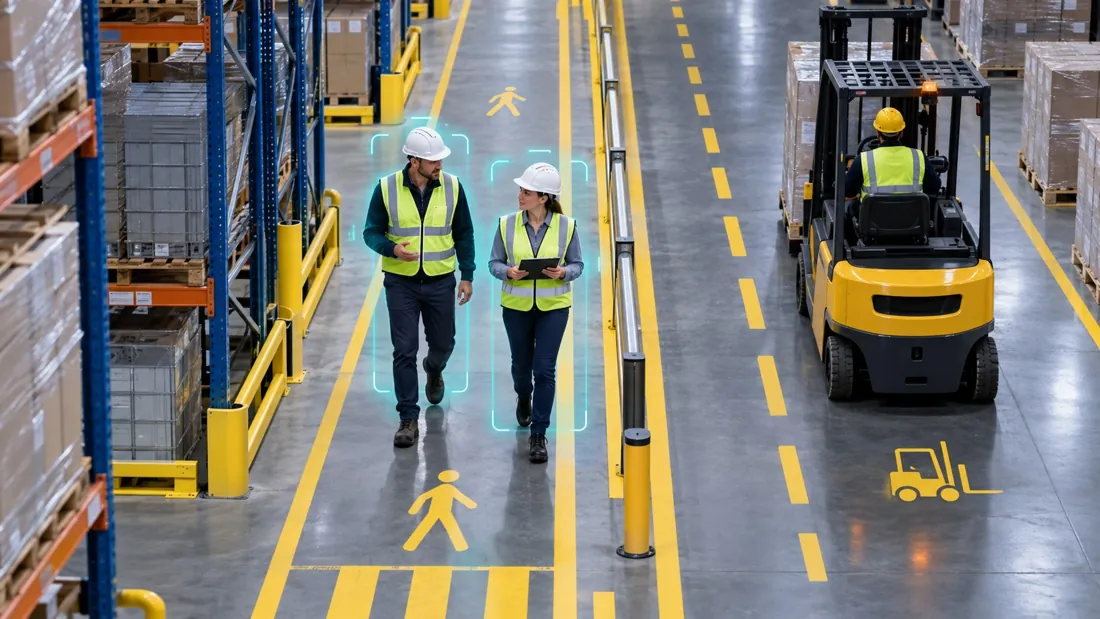
Add camera-based awareness to your existing safety procedures. AI Monitor assesses PPE, spill, fall and smoke or fire detection for the areas where visibility can help.
Start with your existing cameras. Compatibility assessed before rollout.
 AI MONITOR / VIDEO INTELLIGENCE
Assess selected visual checks between routine inspections.
Give the responsible team event context for verification and follow-up.
Use recorded findings to identify areas needing further attention.
A supported detection flags the area. The responsible team verifies the hazard, follows the cleaning or isolation procedure and records the follow-up for review.
A hazard may develop between inspections. An alert is useful when the right person receives it, verifies the situation and follows the appropriate procedure.
Start with the features that answer your business question. Expand each card for how it works.
Review visible protective-equipment use.
Assess supported helmet, vest and other PPE checks for defined camera views. Small items and obscured equipment require particular attention during testing.
Bring visible floor hazards to attention.
Evaluate spill detection for the actual floor, lighting and camera angle. Agree a cleaning-team notification and verification process.
Help teams respond to a possible incident.
Flag supported fall-related events for review and assistance. Test representative movements to distinguish normal working activity from events requiring action.
Add visual context to emergency monitoring.
Assess supported detection of visible smoke or flames. This is an additional monitoring layer, not a replacement for fire detection, alarms or emergency procedures.
Keep agreed access routes under review.
Assess visible blocked-aisle or exit conditions where supported. Set the rule around the site layout and assign a responsible reviewer.
Turn events into accountable follow-up.
Agree categories, supporting footage and action records for safety management. A software alert does not certify compliance or prove the cause of an incident.
AI supports safety management; it does not replace inspections, trained personnel, required protective systems or emergency procedures.
Agree the information your managers and operators need, with access matched to their responsibilities.
Reporting depends on the selected features, configuration and available data.
Begin with selected cameras and one clear objective. We assess, configure and test the solution before you scale.
Review your priorities, existing cameras, viewing angles and connectivity.
Agree the required features, hardware, licences and integrations.
Test representative activity against clear pilot success measures.
Train the team and agree reporting, support and any monitoring service.
Test safely using approved representative footage and scenarios. Review detection usefulness, nuisance alerts and the complete notification workflow.
Pilot duration, equipment, costs and success criteria are agreed before deployment.
No. Camera-based smoke or fire detection adds visual information. Existing fire detection, alarms and emergency arrangements remain essential.
We define visual checks relevant to your policies and environment. Available detections, limitations and review responsibilities are confirmed before rollout.
Potentially. We assess camera compatibility, image quality, coverage, recording access and connectivity before recommending equipment changes. Some views may need adjustment or additional hardware.
Your proposal separates the selected software, on-site equipment, implementation, integrations and any ongoing monitoring or reporting service. Features are not automatically included in a base camera licence.
A scoped pilot can be proposed around selected cameras and measurable objectives. The duration, equipment responsibilities, costs and success criteria are agreed before it starts.
The assessment should define authorised users, viewing and export rights, retention, notices and data-handling requirements. Cloud locations and any required data transfers are reviewed for the selected platform.
Tell us about your business and the problem you want to solve. We will guide you through a relevant demonstration and the next steps.