Focus on relevant activity
Use defined zones and schedules to bring the events that matter into view.
Turn compatible cameras into an extra layer of awareness. AI Monitor connects intrusion alerts, video review and optional offsite monitoring around the risks at your site.
Start with your existing cameras. Compatibility assessed before rollout.
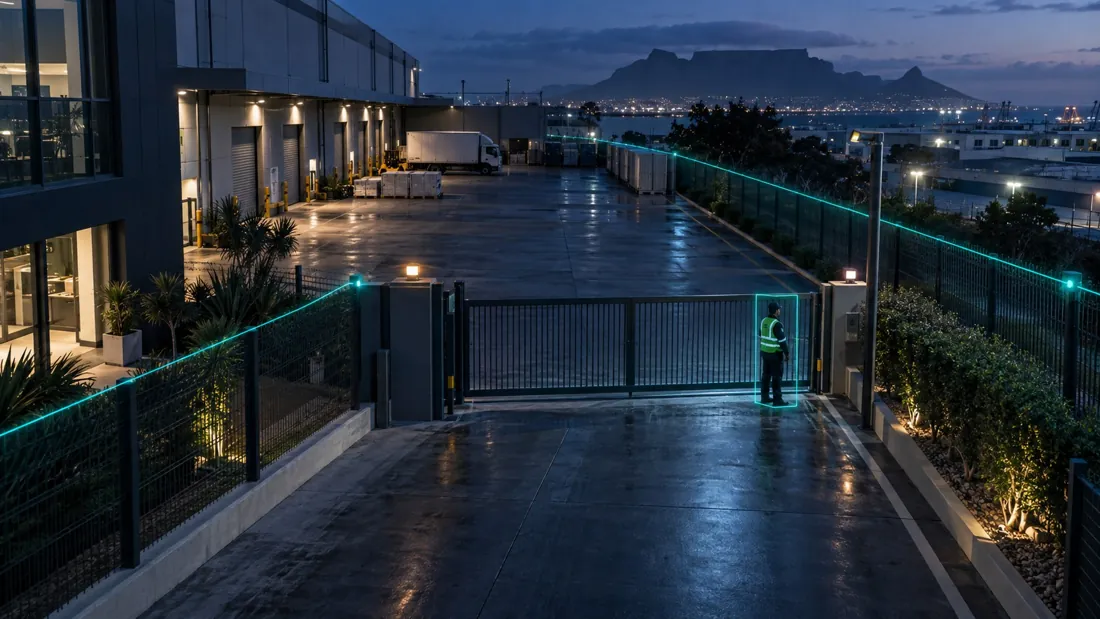 AI MONITOR / VIDEO INTELLIGENCE
Use defined zones and schedules to bring the events that matter into view.
Review available footage before deciding what action is needed.
Connect each reviewed event to agreed contacts and response instructions.
A configured rule flags the entry. The operator reviews the available footage and follows the site's escalation instructions. The client receives the agreed incident record.
A camera can record an incident without anyone knowing it happened. What matters is getting the relevant activity to the right person, with enough context to act.
Start with the features that answer your business question. Expand each card for how it works.
Flag entry into configured areas.
Define camera zones or boundaries around gates, yards and restricted spaces. Detection rules and operating schedules are agreed for each view.
Look beyond simple motion.
Assess lingering activity, fence climbing and movement in a prohibited direction where supported. Set thresholds around normal site activity.
Review the context before escalating.
Use the available event footage to assess a detection. A flagged event is a prompt for review, not proof of criminal intent.
Connect an alert to a response plan.
Add AI Monitor's offsite monitoring where required. Agree coverage hours, authorised contacts, incident categories and escalation instructions separately from the software licence.
Keep a clear account of the response.
Agree which clips, timestamps, operator notes and follow-up actions your team needs. Use reviewed incidents to improve site procedures.
Assess areas without fixed infrastructure.
Solar-powered and cellular-connected surveillance can be assessed as a separate hardware option. Local availability, network support and site suitability are confirmed before quoting.
Detection depends on coverage, lighting, connectivity and configuration. AI supports human review; it does not guarantee detection or replace the site's response arrangements.
Agree the information your managers and operators need, with access matched to their responsibilities.
Reporting depends on the selected features, configuration and available data.
Begin with selected cameras and one clear objective. We assess, configure and test the solution before you scale.
Review your priorities, existing cameras, viewing angles and connectivity.
Agree the required features, hardware, licences and integrations.
Test representative activity against clear pilot success measures.
Train the team and agree reporting, support and any monitoring service.
Validate representative day and night events. Track useful alerts, nuisance alerts, delivery reliability and operator handling against an agreed test plan.
Pilot duration, equipment, costs and success criteria are agreed before deployment.
Yes. We can include your existing team in the proposed workflow. Responsibilities, coverage and escalation steps are agreed and tested. Response services are scoped separately.
Outdoor hardware and connectivity are quoted separately where needed. We check local availability, power, network coverage and licensing before proposing an installation.
Potentially. We assess camera compatibility, image quality, coverage, recording access and connectivity before recommending equipment changes. Some views may need adjustment or additional hardware.
Your proposal separates the selected software, on-site equipment, implementation, integrations and any ongoing monitoring or reporting service. Features are not automatically included in a base camera licence.
A scoped pilot can be proposed around selected cameras and measurable objectives. The duration, equipment responsibilities, costs and success criteria are agreed before it starts.
The assessment should define authorised users, viewing and export rights, retention, notices and data-handling requirements. Cloud locations and any required data transfers are reviewed for the selected platform.
Tell us about your business and the problem you want to solve. We will guide you through a relevant demonstration and the next steps.