
AI CCTV cameras and video analytics are often described as if they are the same thing. They are related, but they are not interchangeable. Understanding the difference helps businesses avoid replacing good cameras unnecessarily and choose the right architecture for the outcome they need.
What is an AI CCTV camera?
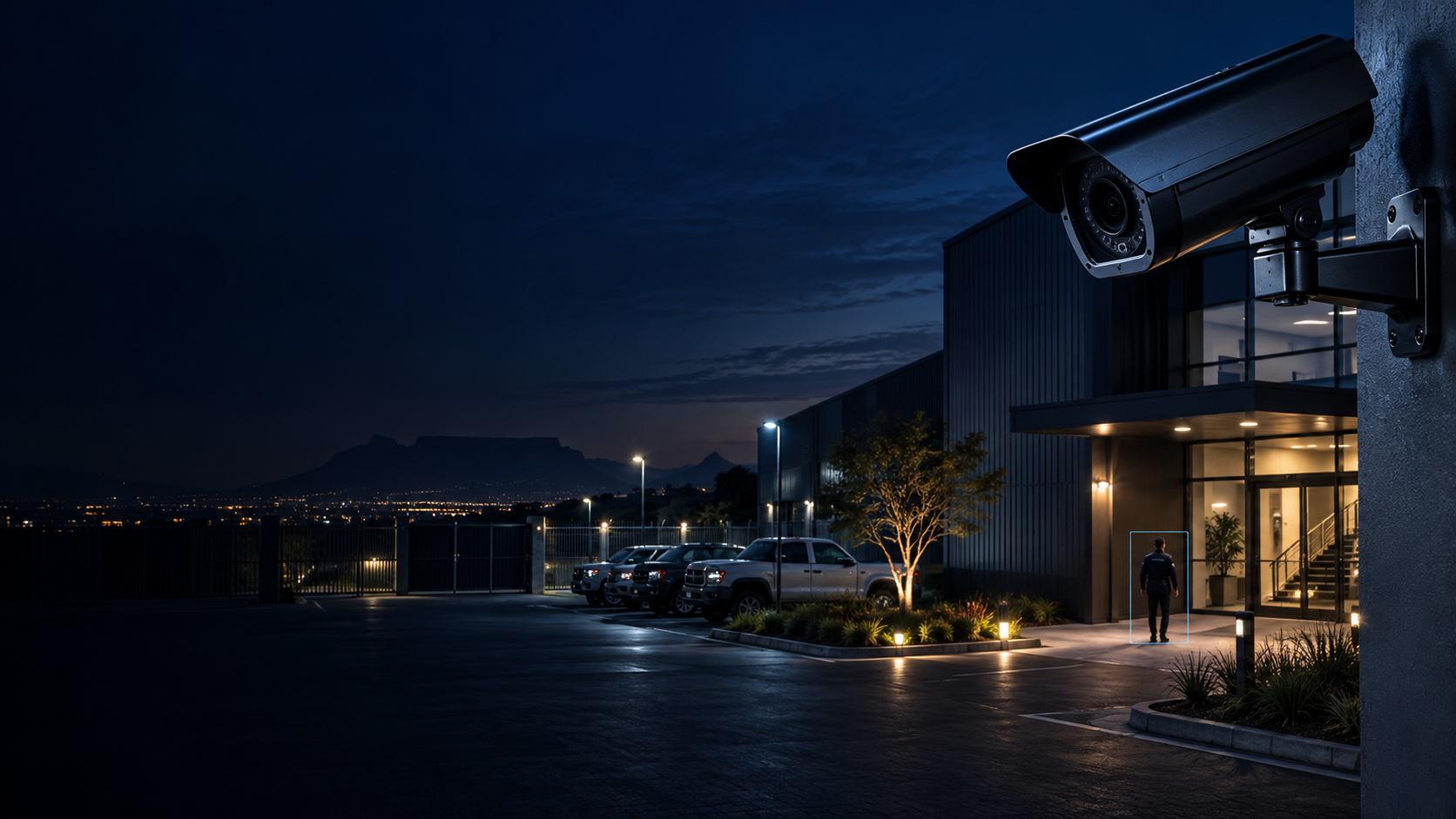
An AI CCTV camera has processing capability built into the camera itself. Depending on the model, it may identify people, vehicles, line crossings, intrusion, loitering or other defined events before the video reaches the recorder or monitoring platform.
This is commonly described as edge analytics because part of the analysis happens at the camera.
What is video analytics?
Video analytics is the software layer that analyses a video stream. It does not have to live inside the camera. Analytics can run on an edge device, local server, recorder, VMS or cloud connected platform.
This distinction matters because a business may be able to add AI capability to compatible existing CCTV cameras without replacing them with new AI branded cameras.
AI CCTV cameras vs video analytics: the practical difference
The main difference is where the intelligence runs. An AI camera contains some analytics at the edge. A video analytics platform can analyse streams from one or many cameras elsewhere in the system.
For a small site, camera based analytics may be enough. For a multi site environment, a central analytics and monitoring platform can provide more consistent rules, reporting and escalation across different camera brands and locations.
When AI cameras make sense
New AI capable cameras can be useful when a site needs new CCTV infrastructure anyway, when specific edge functions are required, or when bandwidth constraints make local processing valuable.
Camera selection should still be based on the actual job. ANPR, perimeter detection, overview monitoring and retail analytics can require different fields of view, lenses and installation positions.
When software analytics make more sense
Video analytics can be the better route when a business already has a usable IP camera estate, wants to add intelligence gradually, or needs a common analytics layer across mixed hardware.
This approach can reduce replacement cost and allow the organisation to prioritise the highest risk or highest value camera views first.
Can existing CCTV cameras use AI analytics?
Often, yes. Compatibility depends on image quality, stream access, resolution, frame rate, network stability, the recorder or VMS and the analytic being used. A professional audit should identify which existing cameras can be retained and which genuinely need an upgrade.
Explore our CCTV installation and upgrade service to assess existing cameras, recording equipment and the views required before choosing new hardware.
Detection is only one part of the outcome
Whether the analytics run on a camera or a server, a security alert still needs a response process. Businesses should ask who verifies an alert, what happens after confirmation, how false events are tuned out and how incidents are recorded.
Our guide to CCTV alert verification and escalation explains how AI detection connects to human decision making.
What about new CCTV installations?
If cameras, networking or coverage need to be upgraded, the physical CCTV design should be treated as its own discipline. Camera placement, lighting, power, recording and network architecture all affect AI performance.
AI Monitor’s CCTV systems page is the primary resource for AI CCTV installation and camera infrastructure. The AI surveillance service covers the analytics, monitoring and intelligent response layer.
Which option is better?
There is no universal winner. The right answer may be AI cameras, central video analytics or a combination of both. The decision should be based on the existing estate, the event you want to detect, the number of sites, bandwidth, response workflow and future expansion plans.
Match the technology to your business problem
For a warehouse, construction site or commercial property that needs attention after hours, explore offsite CCTV monitoring. The assessment should cover detection zones, monitoring hours, operator verification and the agreed escalation process, not just camera specifications.
For a retailer that needs to understand customer traffic and service pressure, explore retail people counting, heat mapping and queue analytics. Define the entrance or service area to measure, then validate the results against observations before using them for management decisions.
For a production or logistics team investigating waiting time and bottlenecks, explore operational video analytics. Agree what each event means and what production-system data is needed. Visible movement alone is not a reliable measure of productive work.
Start with the business problem
Do not begin with a camera model. Begin with the risk or operational question you need the system to solve. Once that is clear, the correct mix of cameras, analytics and monitoring can be designed around it.
Book an AI Monitor site assessment to compare AI camera upgrades with analytics on your existing CCTV network.
Back to Insights