
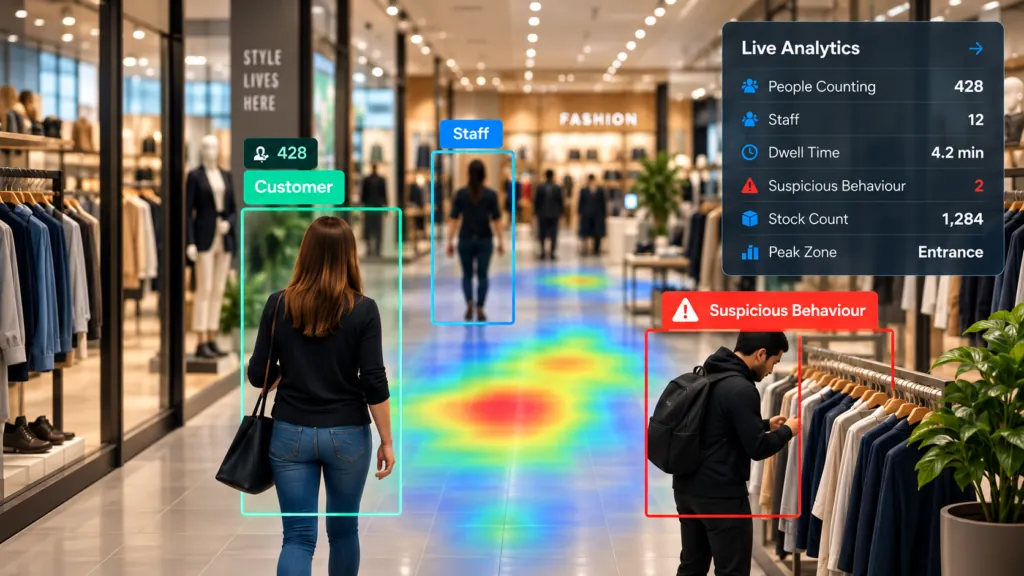
Separate security events from business measures
A restricted-area alert is a prompt for investigation. Footfall is an observation of movement through a defined counting view. Neither should be treated as a complete explanation of what happened in the store. Define the purpose of each measure before combining them in a dashboard.
Review behaviour without assuming intent
Loitering or an unusual movement pattern can justify a closer look where supported rules identify it. It does not prove theft. Review available footage, authorised activity and the store’s procedure before deciding whether the event requires action.
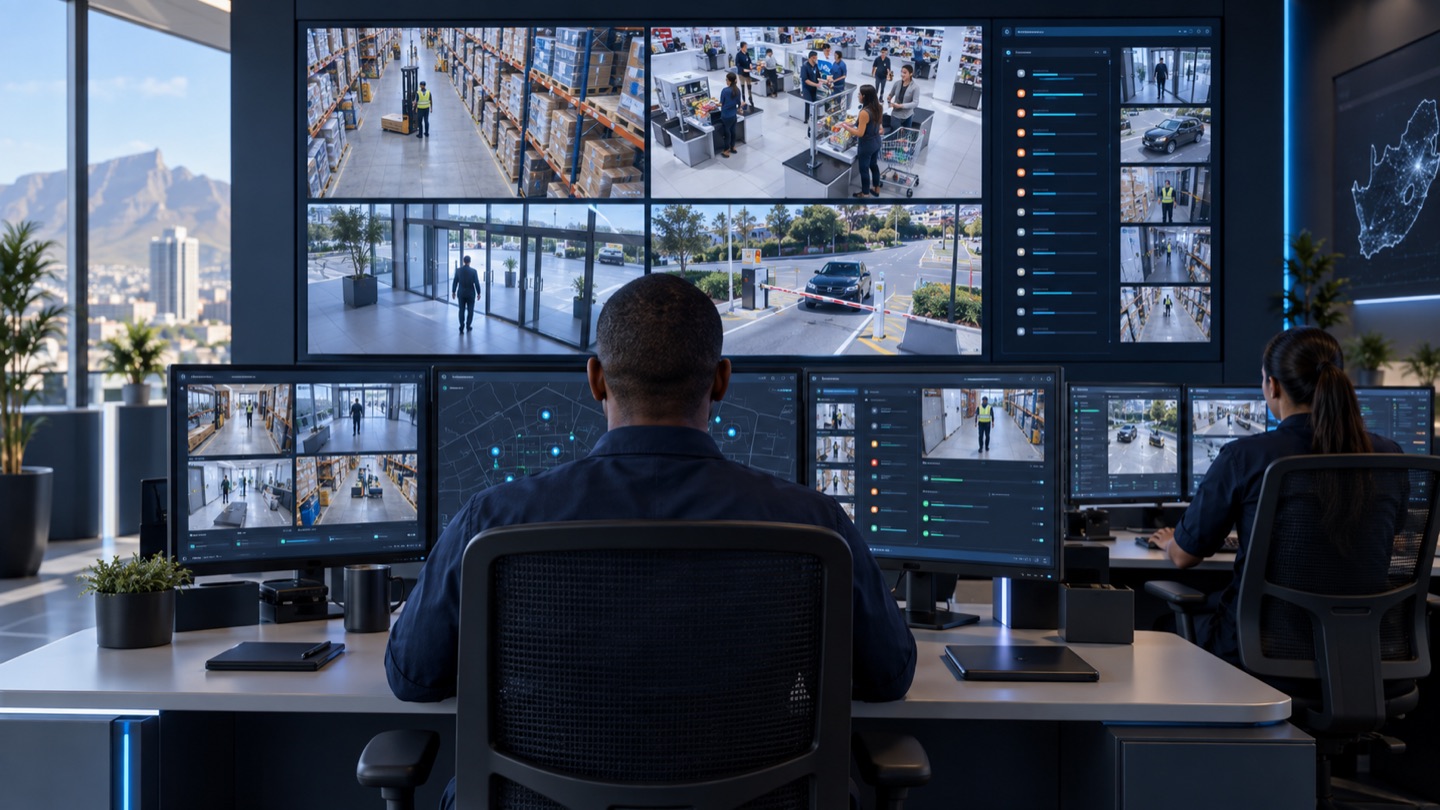
Design counting around the entrance
Choose a view suited to the counting requirement and test representative movement. Groups, obstructions and changes to the entrance can affect the result. Define whether the measure records entries, exits or another supported event; do not automatically describe an entry count as unique customers.
Give queue and staffing data context
A queue observation can help identify a period for review. Compare it with trading conditions, the service process and staffing records. Presence in an area alone does not establish productivity, and a longer queue does not identify its cause without further evidence.
Treat stock evidence carefully
Footage around stock-transfer points can support an investigation. It should be checked against inventory and transaction records. Item-level counting or stock reconciliation needs suitable coverage and supported integration; it cannot be assumed from general CCTV.
Start with one useful question
Choose a question such as “when does this service queue build?” or “which event corresponds to this stock-transfer exception?” Validate the observations and reporting before adding further measures. This creates a clearer path to operational value than collecting every available number.